Dr. Maryanne Garvie-Loveland talks perimenopause and menopause on KOIN Conversations
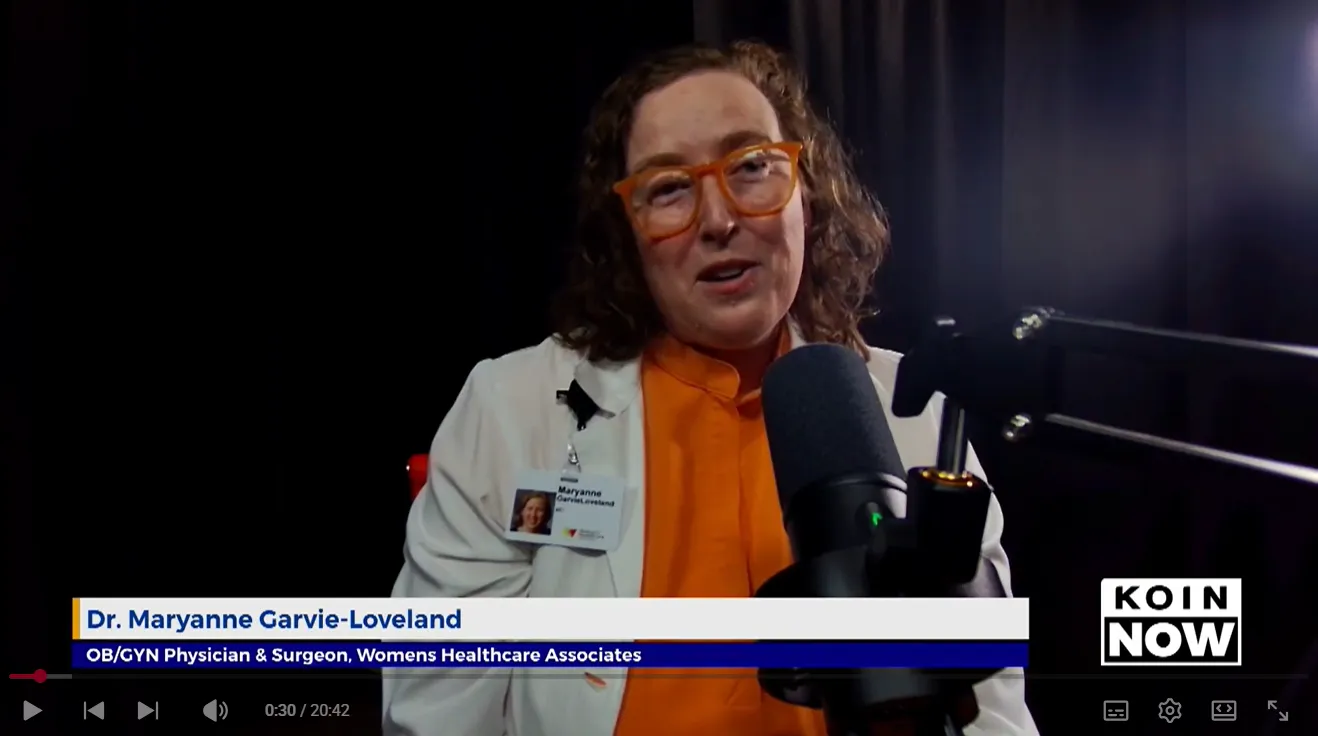
What’s myth and what’s fact when it comes to menopause? WHA’s Maryanne Garvie-Loveland, MD, joined KOIN 6’s Elizabeth Dinh for a KOIN Conversations segment on perimenopause, menopause and the questions so many people are asking about this stage of life.
Watch the full conversation here >
Dr. Garvie-Loveland, who has practiced with WHA for 17 years, started with two of the biggest myths she hears: someone is too young to be experiencing perimenopause, and that symptoms of menopause eventually end. In fact, menopause affects your brain, bone and cardiovascular health for the rest of your life. She also pushed back on the idea that hormone therapy is a “holy grail.” It can be very effective for many symptoms, but it won’t solve every problem, and she told viewers to consider it a red flag when someone promises otherwise, especially if they’re selling a supplement along with the promise.
Much of the lingering fear around hormone therapy traces back to the 2002 Women’s Health Initiative study and the alarming headlines it generated. Dr. Garvie-Loveland walked through what the study actually found: an absolute risk of breast cancer that was real but low, in a study population whose average age was 62 and that included many smokers. “It’s not zero, but it’s low,” she explained. That’s why she builds a personalized plan with each patient that accounts for breast screening, family history and individual risk.
Viewers may have noticed the terminology has evolved, too. Dr. Garvie-Loveland and many of her colleagues now say menopausal hormone therapy rather than the older “hormone replacement therapy,” because menopause, like puberty, is a change in hormones rather than a deficiency.
Hormones aren’t the whole picture, either. Dr. Garvie-Loveland emphasized the lifestyle foundations that benefit everyone at every stage: staying active, social connection, sleep and a mostly-vegetable diet. She made a particular case for resistance training and weightbearing exercise, which prevent osteoporosis and keep people mobile and able to do the things they want to do.
Her best advice? Start the conversation. There’s no one-size-fits-all approach, and this topic deserves more time than an annual exam allows. She suggests raising it at your annual, then scheduling a dedicated follow-up, which can often happen by telehealth. And as she put it: “You’re the one living in your body.” If something feels off, trust your instincts and talk to your provider.
Dr. Garvie-Loveland and other WHA experts have written a series of articles on perimenopause and menopause, from early symptoms to menopausal hormone therapy to premature ovarian insufficiency (POI). Explore the series on our blog or visit Perimenopause, Menopause & Beyond to learn more about care at WHA.
Ready to talk with one of our providers? Find a provider and location or call your WHA office to schedule an appointment.