Dr. Carrie Frederick talks to KOIN 6 about the estrogen patch shortage
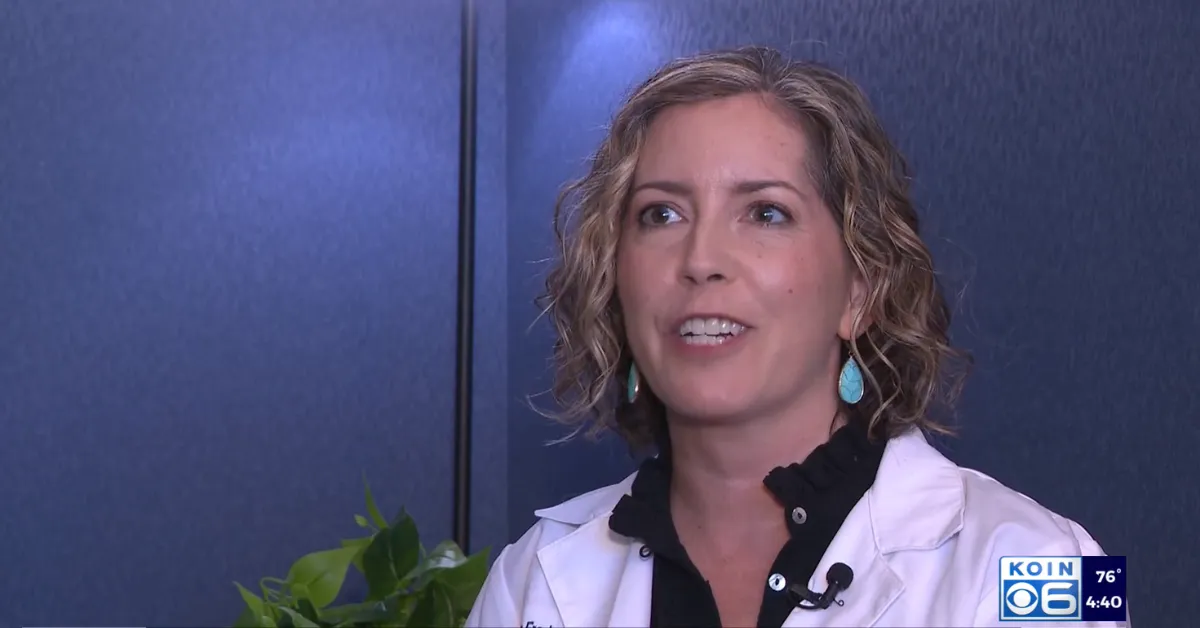
If you’ve had trouble filling your estrogen patch prescription lately, you’re not alone. WHA’s Carrie Frederick, MD, MPH, spoke with KOIN 6’s Elizabeth Dinh about why the patches are harder to find right now and what patients can do in the meantime.
Dinh reports that more people are talking about perimenopause and menopause symptoms and treatment options, hormone therapy is considered safer than before, and providers are prescribing it as more patients ask for it. Dr. Frederick told KOIN the estrogen patch happens to be the most popular option, both for its ease of use and because it’s one of the safest ways to be on hormone therapy. That also makes it the most in-demand.
Dr. Frederick, who hears daily from patients worried about losing access to the medication easing their symptoms, explained that simply producing more patches isn’t as easy as it sounds. Patches take longer to make and require very specific conditions, regulations and quality control, so a handful of manufacturers are working to ramp up production. As she put it, “it’s just going to take time.” She’s heard the shortage could last through the end of the year, and the FDA recently announced it’s aware of the problem and working with all six manufacturers to increase supply.
In the meantime, patients can consider other options like an estrogen spray or gel, Dinh reports, so talk with your provider if your pharmacy alerts you to a delay. And if you do end up with a gap between doses, Dr. Frederick offered some reassurance that it’s not dangerous from a medical standpoint. People don’t feel good with a gap, though, which is why she and her colleagues try to keep patients on a consistent prescription to protect their quality of life.
Dr. Frederick has written extensively about menopausal hormone therapy for WHA, including how long you can stay on menopause hormone therapy and the potential role of testosterone therapy in your treatment plan. Explore the full perimenopause and menopause series on our blog or visit Perimenopause, Menopause & Beyond to learn more about care at WHA.